Est. 1889 | 214 South 7th Street | Fernandina Beach, Florida
A Queen Anne treasure in the heart of the Isle of Eight Flags
The House
Three city lots. Six fireplaces. One hundred and thirty-six years of history.
The Swann-Kelly House rises from three city lots in the heart of Fernandina Beach's historic district—a rare footprint in a downtown where land has always been precious. Built in 1889, this two-and-a-half story Queen Anne Victorian stands as one of the finest frame vernacular homes on Amelia Island, its shingled turret and wrap-around porch a familiar landmark along South 7th Street.
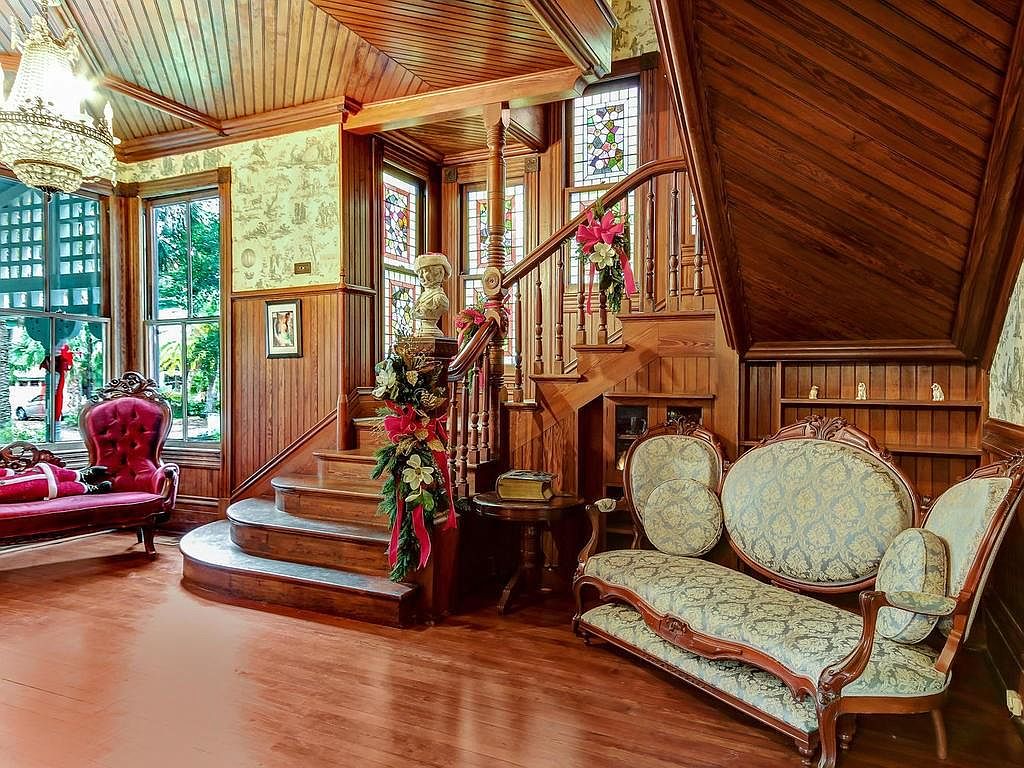
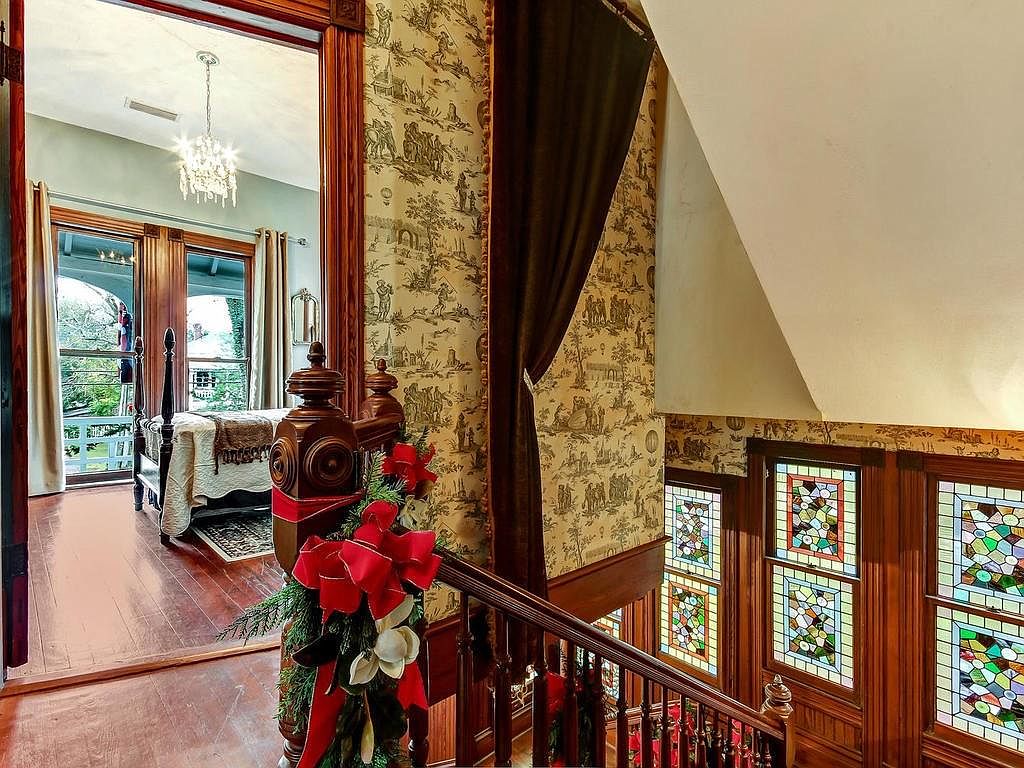
Step through the front door and the house declares itself. The magnificent entry hall features an inlaid ceiling of rich woodwork, and a mahogany staircase that climbs past a gallery of stained glass windows. Original heart pine floors run throughout—warm underfoot, glowing in the afternoon light.
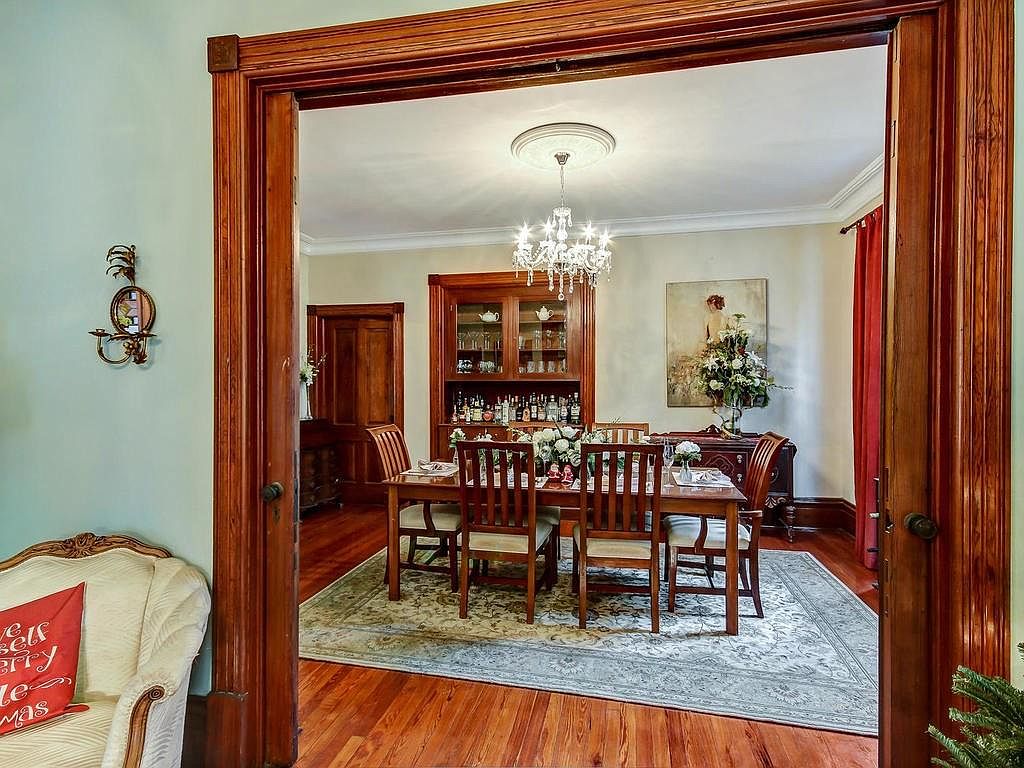
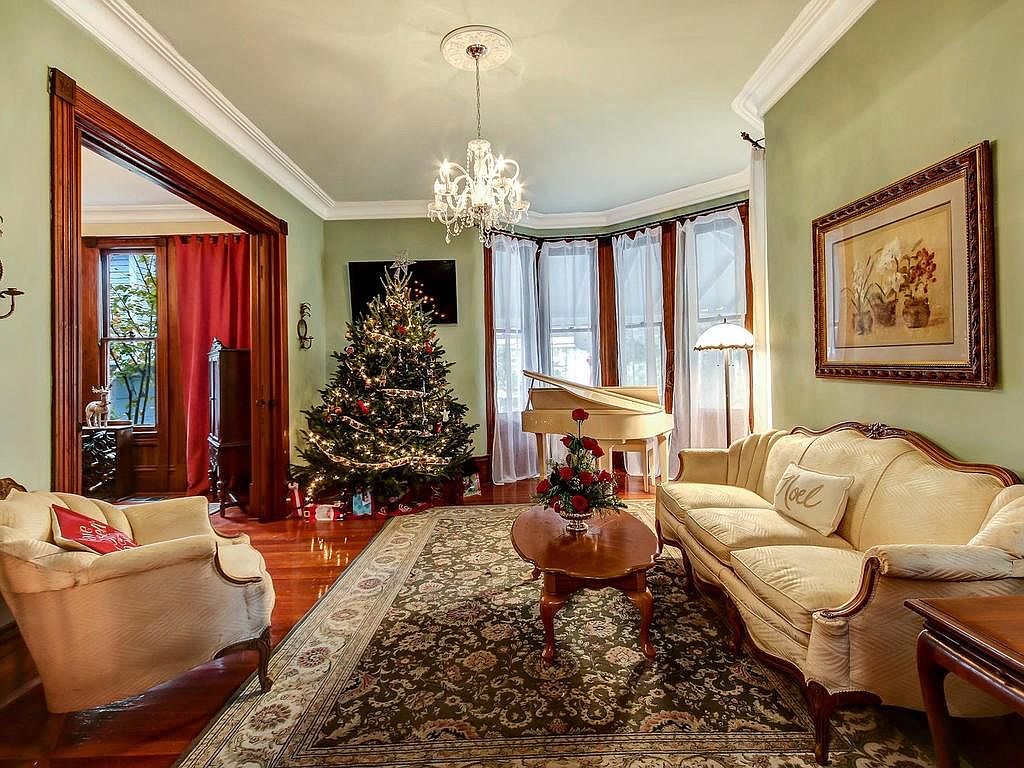
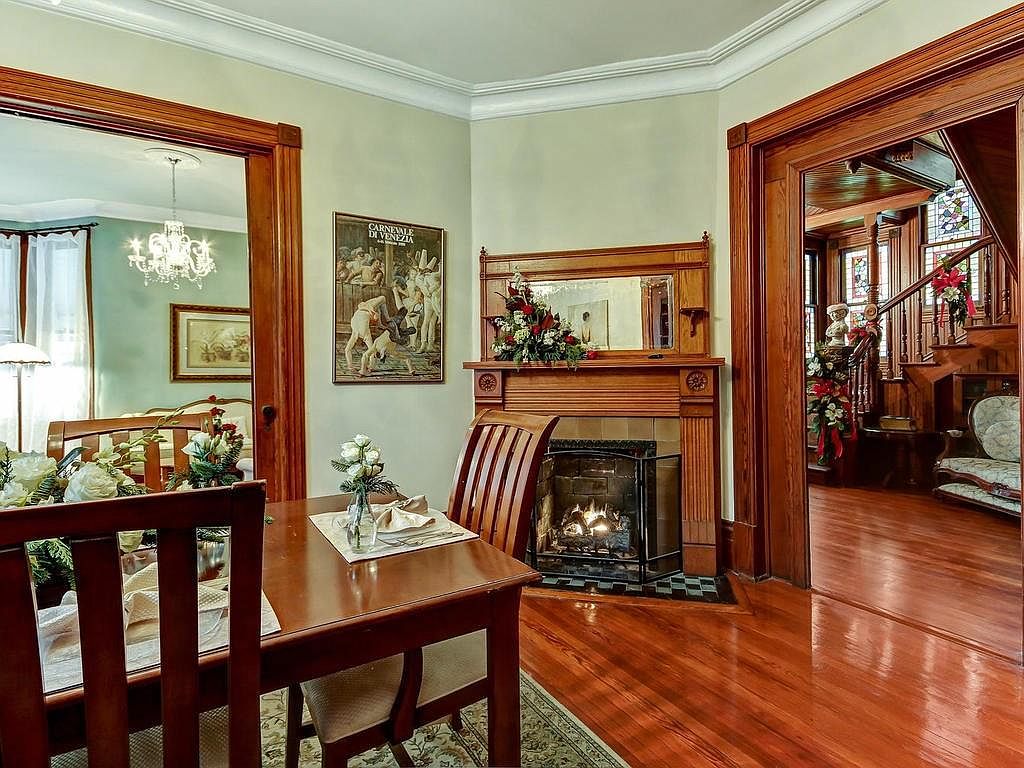
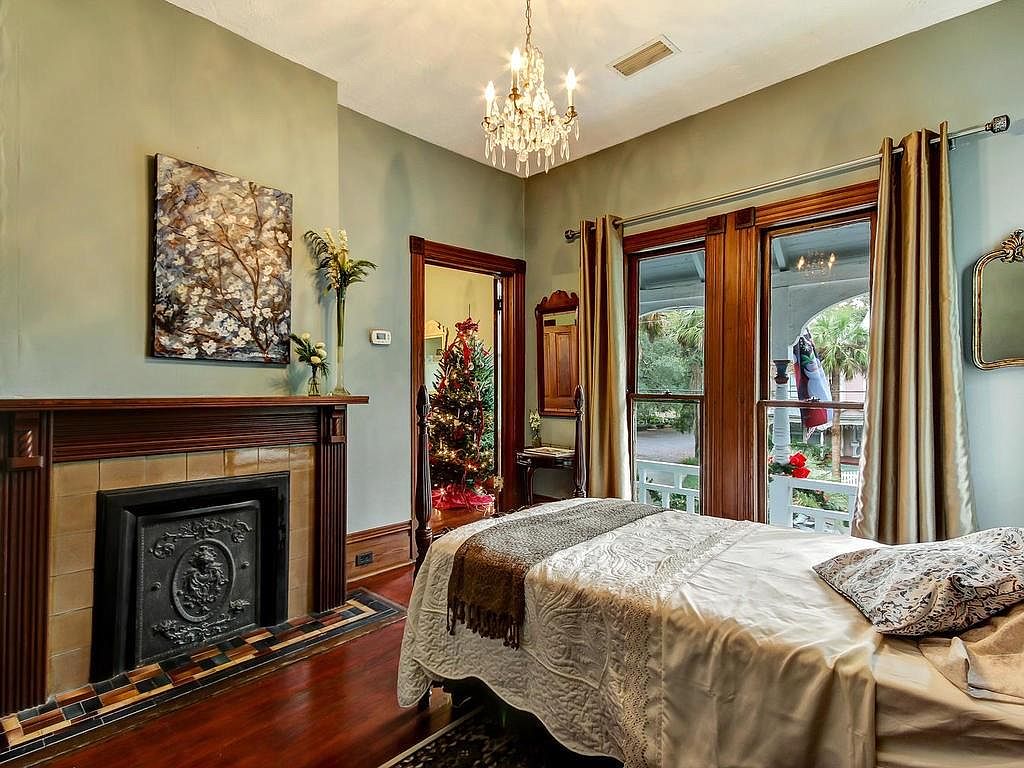
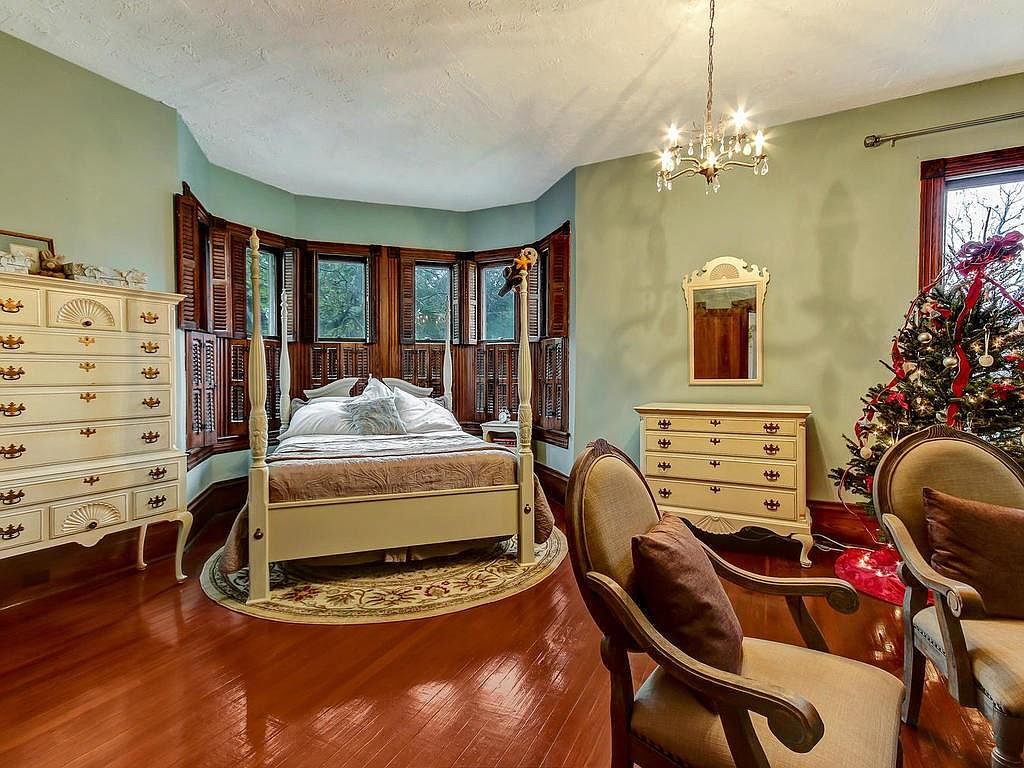
The craftsmanship continues in every direction: wood and plaster moldings frame the rooms, pocket doors slide open between parlors, and six fireplaces anchor the home—three fitted for gas, one still burning wood, each with its own ornamental surround.
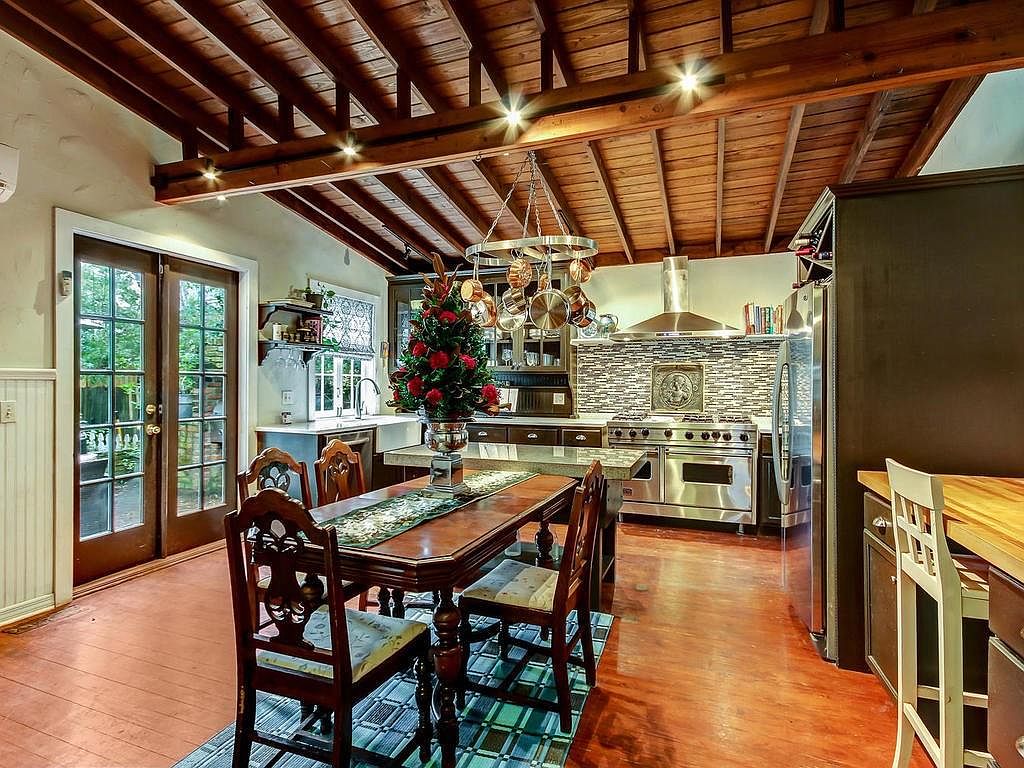
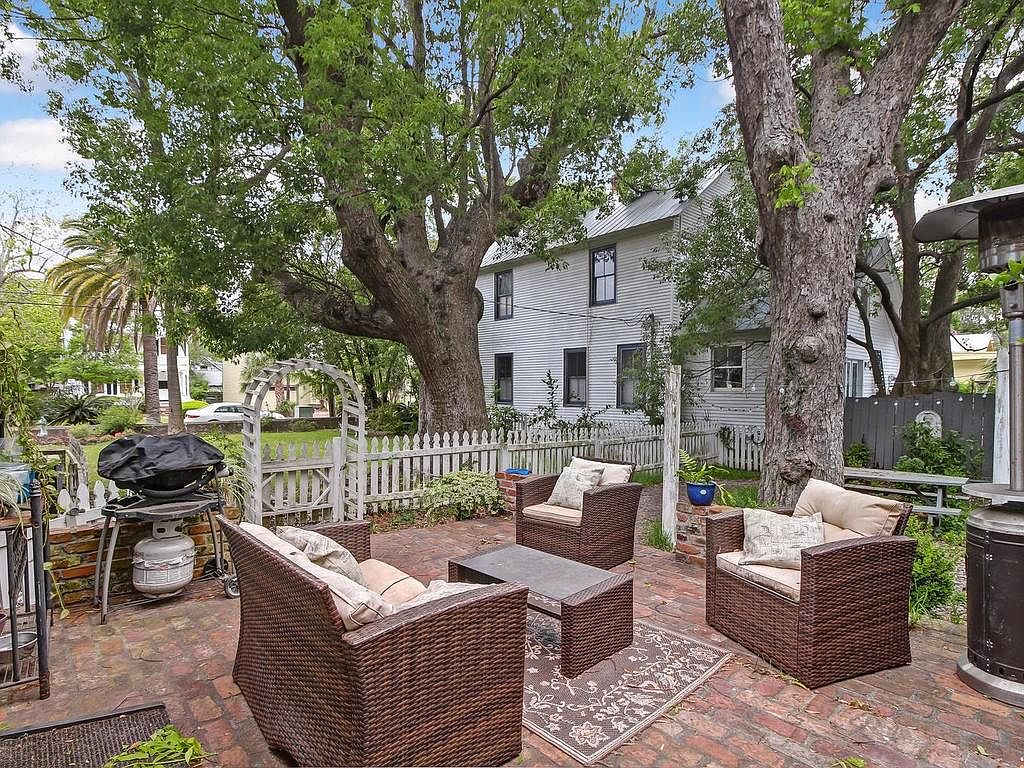
The gourmet kitchen blends modern capability with period character, its vaulted wood ceiling echoing the craftsmanship found throughout the house. French doors open onto an outdoor brick patio with its own fireplace—a gathering spot beneath live oaks draped in Spanish moss.
The property includes an on-site carriage house, recently remodeled with one bedroom and one bath—a self-contained retreat that mirrors the charm of the main home. All of it sits on approximately a third of an acre, a rare expanse for downtown Fernandina Beach.
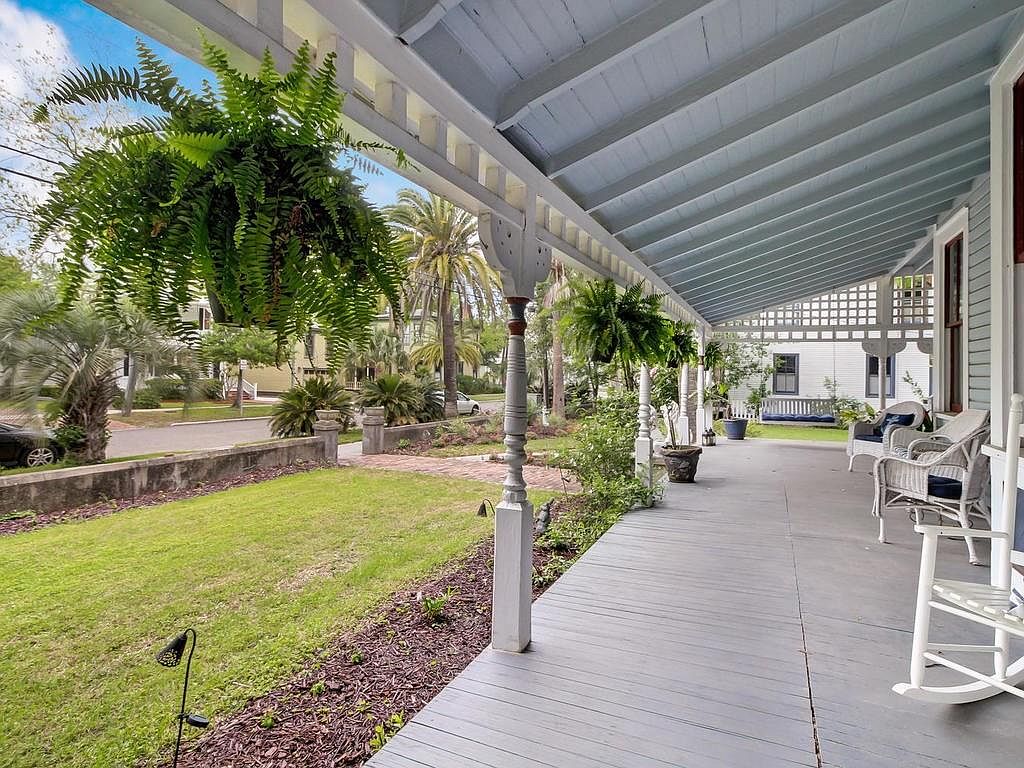
The fully restored wrap-around porch is the kind of place where neighbors stop to talk and afternoons disappear. A new metal roof crowns the house, and the brick walkway leads from the street through gardens that have been tended for more than a century.
The Swann-Kelly House is listed on the National Register of Historic Places as part of the Fernandina Beach Historic District, first designated in 1973—one of more than fifty blocks of downtown Fernandina Beach that carry this distinction.
The History
From a civic leader's vision to a Hollywood filming location
The history of the Swann-Kelly House is inseparable from the history of Fernandina Beach itself. Its walls have witnessed the golden age of a railroad town, the comings and goings of one of Florida's most prominent families, and even a Hollywood film crew or two.
Senator David Yulee builds Florida's first cross-state railroad through Fernandina, transforming the quiet port town into a booming hub. The golden age of Amelia Island begins.
Samuel Ashe Swann constructs the Swann Building at North 4th and Centre Street—a commercial landmark that still stands today. It housed offices, stores, and a reading room and gymnasium he furnished for the town's young people.
Swann designs and builds the house that will bear his name at 214 South 7th Street. A Queen Anne Victorian with a shingled turret, wrap-around porch, and six fireplaces—a home befitting one of Fernandina's most prominent citizens.
Samuel Ashe Swann (1832–1909) was a founding member of St. Peter's Episcopal Church, a major supporter of civic life, and so central to the city's commerce that title searches across the region frequently trace back to documents bearing his signature.
The Kelly family becomes the home's subsequent owners, lending their name to the house and ensuring its continued care through the decades. The Swann-Kelly House earns its hyphenated identity.
Swann's daughter Elizabeth married into the Carroll family. Her great-grandson, Charles Gordon Carroll III, goes on to produce the Paul Newman classic Cool Hand Luke—a surprising thread connecting this quiet Victorian to the silver screen.
The Fernandina Beach Historic District is listed on the National Register of Historic Places, encompassing more than fifty blocks of downtown—including the Swann-Kelly House at 214 South 7th Street.
The ABC TV movie All She Ever Wanted, starring Marcia Cross, films on location at the Swann-Kelly House. The home trades its quiet dignity for a brief turn as a television backdrop.
Fully restored with a new metal roof and modern amenities, the Swann-Kelly House continues to anchor South 7th Street. Photographs and documents related to the home are held at the Amelia Island Museum of History.
On Screen
When Hollywood came calling on South 7th Street
In 1996, the Swann-Kelly House traded its role as a quiet family home for a brief turn as a television filming location. The ABC TV movie All She Ever Wanted brought cameras, crew, and a future Desperate Housewives star to Fernandina Beach.
ABC Television • April 14, 1996 • 1 hr 40 min
“Before Wisteria Lane, Marcia Cross called the Swann‑Kelly House home.”
— at least for a few weeks of filming
The Town
Where Victorian grandeur meets island charm
The Swann-Kelly House sits in one of the most storied communities in the American South. Fernandina Beach occupies the northern end of Amelia Island—a barrier island with a past as layered and colorful as the Victorian homes that line its streets.
Amelia Island has been claimed by more sovereign nations than any other place in the United States. Eight flags have flown over this barrier island since European contact—a distinction no other American locale can match.
Walking distance from the Swann-Kelly House, downtown Fernandina Beach is a living museum of Florida history.
Est. 1878
Florida's oldest continuously operated drinking establishment, serving spirits on Centre Street since the golden age of the railroad.
Est. 1857
The oldest surviving hotel in Florida. Ulysses S. Grant and Jose Martí are among the names in its long guest register.
Civil War Era
A beautifully preserved fortification at the island's northern tip, with monthly living-history reenactments bringing the Civil War era to life.
c. 1899
Once the gateway for travelers arriving by rail, the historic depot now serves as the Fernandina Beach Visitor Center.
The grand, sherbet-hued Victorian mansions on the side streets off Centre Street earned their neighborhood the name "Silk Stocking District" during the golden age. The Vanderbilts, DuPonts, and Carnegies all frequented Amelia Island, drawn by the warm winters and the elegance of a town built on railroad prosperity.
Today, more than fifty blocks of downtown Fernandina Beach hold both Florida Main Street and Preserve America designations—recognition that this is a community that takes its past seriously.
In the 1850s, Senator David Yulee laid Florida's first cross-state railroad through Fernandina, connecting the Atlantic coast to the Gulf of Mexico. Almost overnight, the quiet port became a boomtown. The entrepreneurial elite followed, building the grand homes and commercial blocks that define the downtown to this day.
Centre Street remains the walkable heart of it all—independent shops, restaurants, and galleries occupying the same storefronts that served the railroad era.
Visit
On your next visit to Amelia Island